When you find mold in a finished basement or a visible corner of a living room, the response is fairly straightforward: isolate the area, remove the contaminated material, and dry the surface. But when mold takes hold in an attic, the game changes. Attics are not just another room with a sloped ceiling. They are a unique environment where heat, moisture, and limited airflow collide. I have spent enough time inside attics in Fort Worth to know that the standard playbook for mold cleanup often falls short up there. Attic mold remediation requires a method that accounts for the space's quirks, the materials involved, and the very real health risks of working in a confined, often dusty area.
Let me walk you through what makes attic mold remediation different from other mold jobs, and what you actually need to do it right.
Understanding the Attic Environment
An attic is not designed to be a living space. It is a buffer zone between your conditioned interior and the brutal Texas sun. In Fort Worth, attics regularly hit 130 degrees Fahrenheit in the summer. That heat alone does not kill mold, but it does create a pressure differential that pulls humid air up from the living space below. When that warm, moisture-laden air hits a cooler roof deck, condensation forms on the underside of the sheathing. That condensation soaks into attic insulation and wooden trusses, and within 48 hours mold spores that were already floating in the air find a foothold. A roof leak is the obvious culprit, but more often than not, the real problem is simple condensation driven by poor ventilation.
Many homeowners assume that a ridge vent or a soffit vent is enough to keep an attic dry. In reality, those vents only work when they are properly sized and unobstructed. I have crawled through attics where insulation was shoved into the soffit vents, effectively sealing the space. Without adequate airflow, moisture accumulates and mold thrives. That is why the first step in any attic mold remediation project is not scrubbing or spraying. It is fixing the ventilation and stopping the moisture source.
Why You Cannot Treat Attic Mold Like Bathroom Mold
If you have ever cleaned mold off a shower tile with bleach, you know that approach works on non-porous surfaces. But attics are full of porous materials: wood, fiberglass insulation, OSB sheathing, and sometimes old cellulose insulation. Bleach does not kill mold on wood. It kills the surface discoloration, but the water in the bleach soaks into the wood and feeds the roots, or hyphae, that remain deep in the grain. Within weeks, the mold comes back stronger. Professional attic mold remediation avoids bleach for that reason. Instead, we use antimicrobial agents like Concrobium or Mold Armor. These products leave a crystalline barrier that prevents regrowth, and they do not introduce extra moisture into the wood.
Another common mistake is thinking that a mold testing kit you buy at the hardware store gives you a complete picture. Those kits can tell you if mold spores are present, but they do not tell you what species you are dealing with, and they certainly do not measure the extent of hidden growth behind the attic insulation. I have seen homeowners spend money on testing kits only to get a vague result that says "mold detected." That does not help you plan remediation. If you suspect mold in your attic, a professional inspection that includes moisture readings and thermal imaging is far more valuable than a petri dish left out for an hour.
The Real Work of Attic Mold Remediation
Let me describe what actual attic mold remediation looks like on a typical Fort Worth home where the mold is limited to the underside of the roof deck and the top layer of insulation.
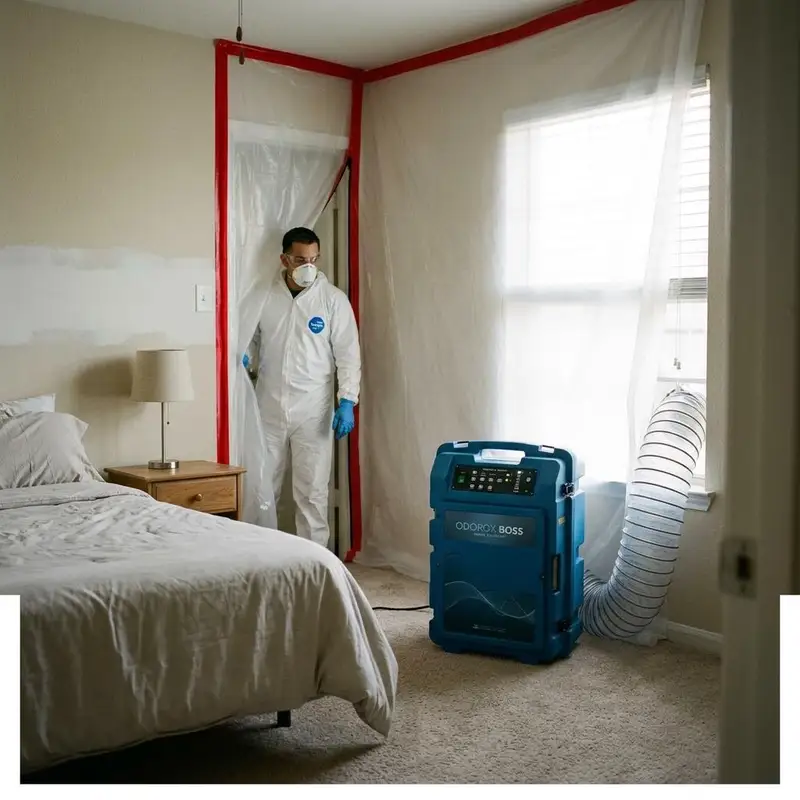
First, we establish containment. Attics are directly connected to the rest of the house through the ceiling, light fixtures, and HVAC ducts. Without a containment barrier, you will spread mold spores into every room below. We seal off the attic access with heavy plastic sheeting and zippered entry, and we use an air scrubber fitted with a HEPA filter to capture airborne spores. The air scrubber runs continuously during the job, and we set up negative air pressure inside the containment area. That means the air pressure in the attic is lower than the pressure in the house, so any air that leaks out goes through the HEPA filter, not into your living room.
Next, we remove all contaminated attic insulation. This is not a job for a N90 respirator alone. A N90 respirator is fine for basic dust, but for mold remediation, you need at least a N95 or, better yet, a half-face respirator with P100 filters. The N90 respirator does not filter out the smallest mold spores effectively. OSHA guidelines for mold remediation recommend a minimum of N95, and in attics where the mold is heavy, we step up to a full-face respirator with organic vapor cartridges, especially when using antimicrobial chemicals.
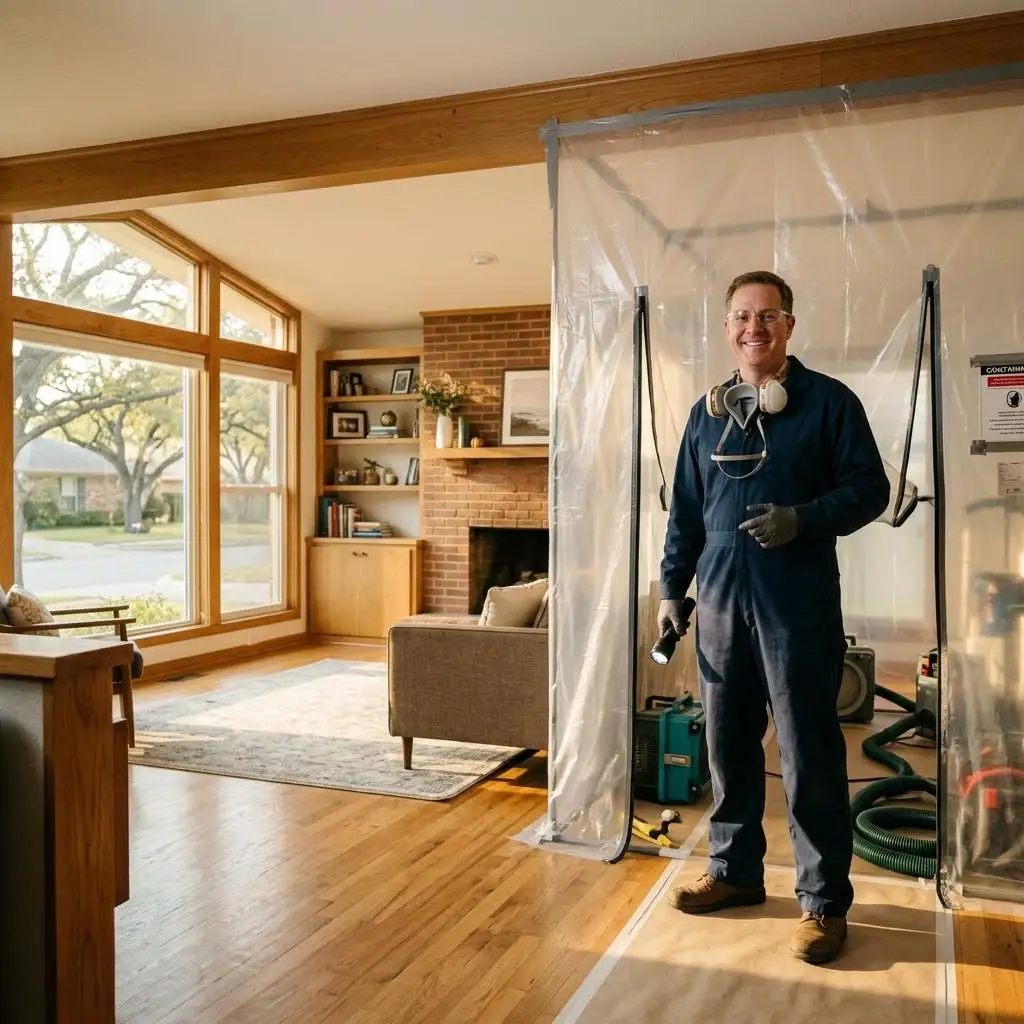
After the insulation is bagged and removed, we HEPA vacuum every surface: the rafters, the trusses, the underside of the roof deck, and the attic floor. A HEPA vacuum is not the same as a shop vac with a HEPA bag. A true HEPA vacuum captures 99.97 percent of particles down to 0.3 microns. That is necessary because mold spores are about 1 to 10 microns, and a standard vacuum will blow them right back into the air. I have seen crews skip this step and try to go straight to fogging or spraying, and the mold comes back because the spores were never physically removed.
Once the vacuuming is complete, we apply a moldicide like Concrobium or Mold Armor to all affected wood surfaces. For heavy infestations, we sometimes use a product like KILZ that also seals the wood, creating a barrier that prevents moisture from reaching the mold roots. Then we install new attic insulation, making sure the soffit vents and ridge vents are clear and that the insulation does not block them. Finally, we recommend a dehumidifier in the attic space if the moisture source cannot be fully eliminated. In Fort Worth, where summer humidity is high, that dehumidifier can make the difference between a one-time cleanup and a recurring problem.
Health and Safety Considerations
The Texas Department of State Health Services does not have a specific mold remediation certification, but the IICRC does set standards for mold remediation. IICRC-trained technicians follow a detailed protocol that includes personal protective equipment, containment, and clearance testing. If you are hiring someone for attic mold remediation, ask if they follow IICRC standards. It is a sign they take the work seriously.
Mold in an attic is not just a structural problem. It affects indoor air quality throughout the house. The spores that grow in the attic can travel through the HVAC system and land in your bedrooms, your living room, and your kitchen. People with asthma, allergies, or compromised immune systems are especially vulnerable. The EPA has published extensive guidance on mold remediation, and they emphasize that the goal is not to kill mold but to remove it physically and fix the moisture problem. No amount of chemical fogging will solve an attic that stays damp.
When to Call a Professional
If the mold covers an area smaller than ten square feet and you can access it safely, you might handle it yourself with a HEPA vacuum and an antimicrobial spray. But if the mold covers a larger area, if the attic insulation is saturated, or if you suspect a roof leak that you cannot locate, it is time to call a professional. Attic mold remediation involves working in tight, hot spaces with hazardous materials. The cost of a professional job is modest compared to the health cost of doing it wrong.
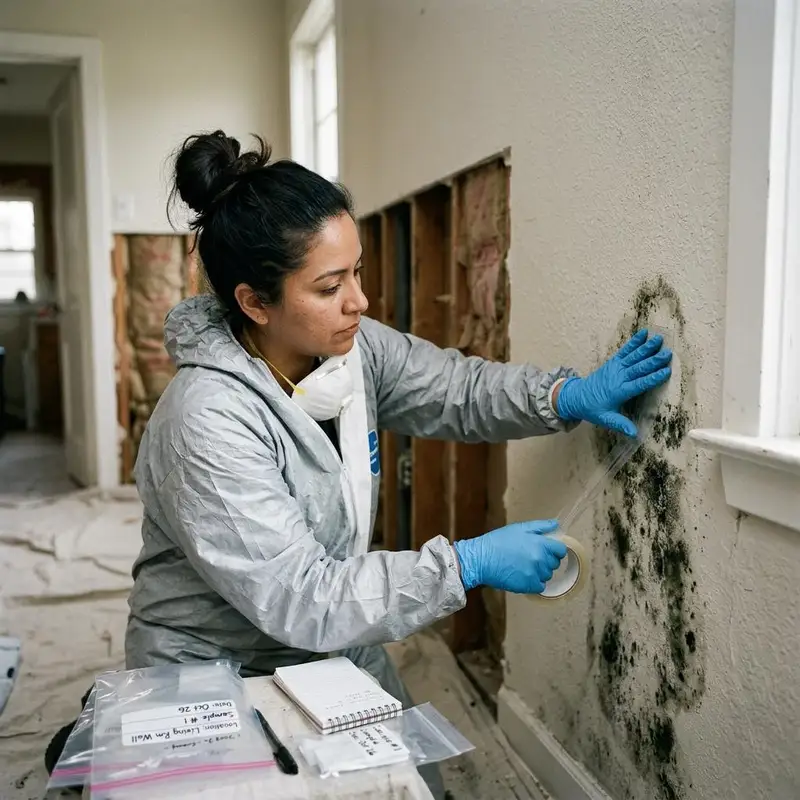
In Fort Worth, the combination of high heat, high humidity, and frequent storms makes attics a prime location for mold. I have seen attics where the mold was so thick it looked like black velvet on the underside of the plywood. In those cases, the remediation required removing the roof deck and replacing it. That is a big job, but it is the only way to restore a healthy home.
If you are dealing with attic mold, remember: the fix is not about the mold itself. It is about the moisture. Fix the roof leak, improve the ventilation, and use a dehumidifier if needed. Then clean up the mold with the right tools and the right methods. That is what real attic mold remediation looks like.